‘Mysteries of a Communist Cave’ Investigates the Exotic Origins of a Parisian Party Headquarters
Review: ‘Mysteries of a Communist Cave’ by Lytle Shaw
On the cover of Mysteries of a Communist Cave, a woman stands with her back to the reader. As if a contrapposto stance and the hands on her hips weren’t enough to accentuate the curves of this jack-booted femme fatale, a red hammer and sickle are emblazoned on the posterior of her form-fitting cargo pants. She’s facing a man who is besuited, smoking, and standing in the entrance to some inner sanctum. He is in shadow, silhouetted by a crimson glow coming from within the chamber. He seems too suave to be surprised. Has he been waiting for her? Is he blocking her from entering? Regardless, the tension between them is palpable, and he seems to be about to say, “What’s a nice comrade like you doing in a place like this?”
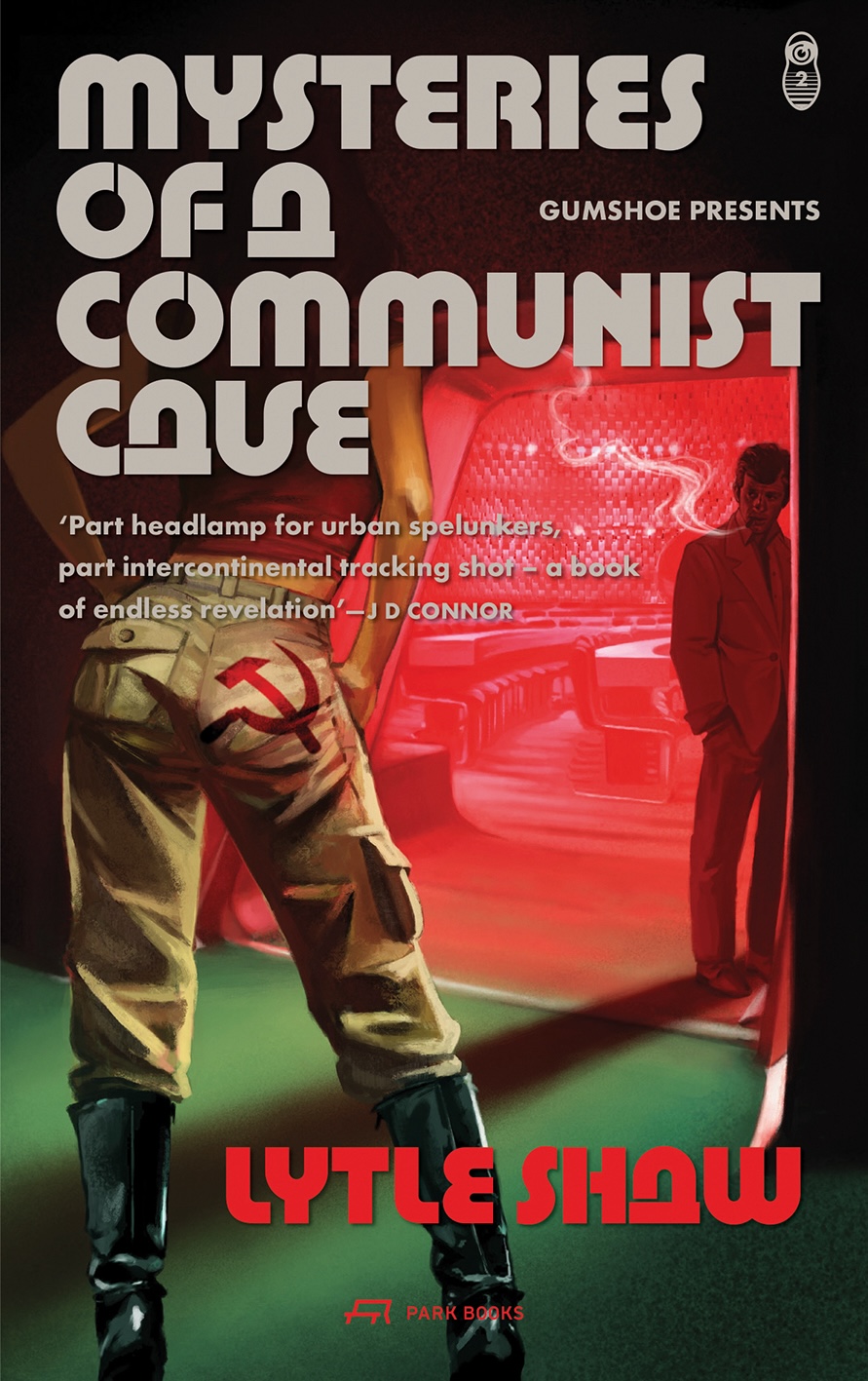
Mysteries of a Communist Cave, by Lytle Shaw. Park Books, 288 pages, $19. Image courtesy the publisher, click to enlarge
The adage “don’t judge a book by its cover” isn’t always good advice, but for author Lytle Shaw’s addition to the Gumshoe series of architectural histories—following last summer’s The House of Doctor Koolhaas by Françoise Fromonot—perhaps some dialectical thinking is required: to understand this new architectural treatise masquerading as a detective novel, separating the cover from its content is necessary…at least at first.
Inside, readers will find none of this melodrama but rather a robust analysis of the complexities and contradictions of postwar Marxism and of architecture’s capacity to represent them through form. The nonfiction book tells the story of how Brazilian architect Oscar Niemeyer came to design the headquarters of the French Communist Party (PCF) in Paris, and of the evolving intellectual landscape behind its commissioning in 1965 through its completion in 1980.
Niemeyer, best known for his designs for the planned capital city of Brasília and for his collaboration on the United Nations headquarters in New York, was a devout Communist who helped coordinate a red press and, in the ’80s, would even serve as the president of the Brazilian Communist Party. As Shaw details, his politics forced him to flee the military dictatorship that seized power in Brazil in the early 1960s. Niemeyer was at the time already a celebrity, so much so that he was personally invited by none other than Charles de Gaulle to remain in Paris as a political refugee. Shortly after setting up shop on the Champs-Élysées, and likely in large part because he offered to work pro bono, he was awarded the commission for the design of the PCF headquarters.
This chronology is straightforward; the “mysteries” promised by the book’s title, therefore, are a bit of an overstatement to describe Shaw’s interrogations of the structure’s form and context: Why does it look like a deformed hammer and sickle in plan? Isn’t it suspicious that the “cave” of the main hall of the National Council is sequestered underground while the banal office spaces are put on display? Why not a French architect? And most importantly, how could the PCF select an acolyte of Le Corbusier—an alleged Fascist collaborator?!
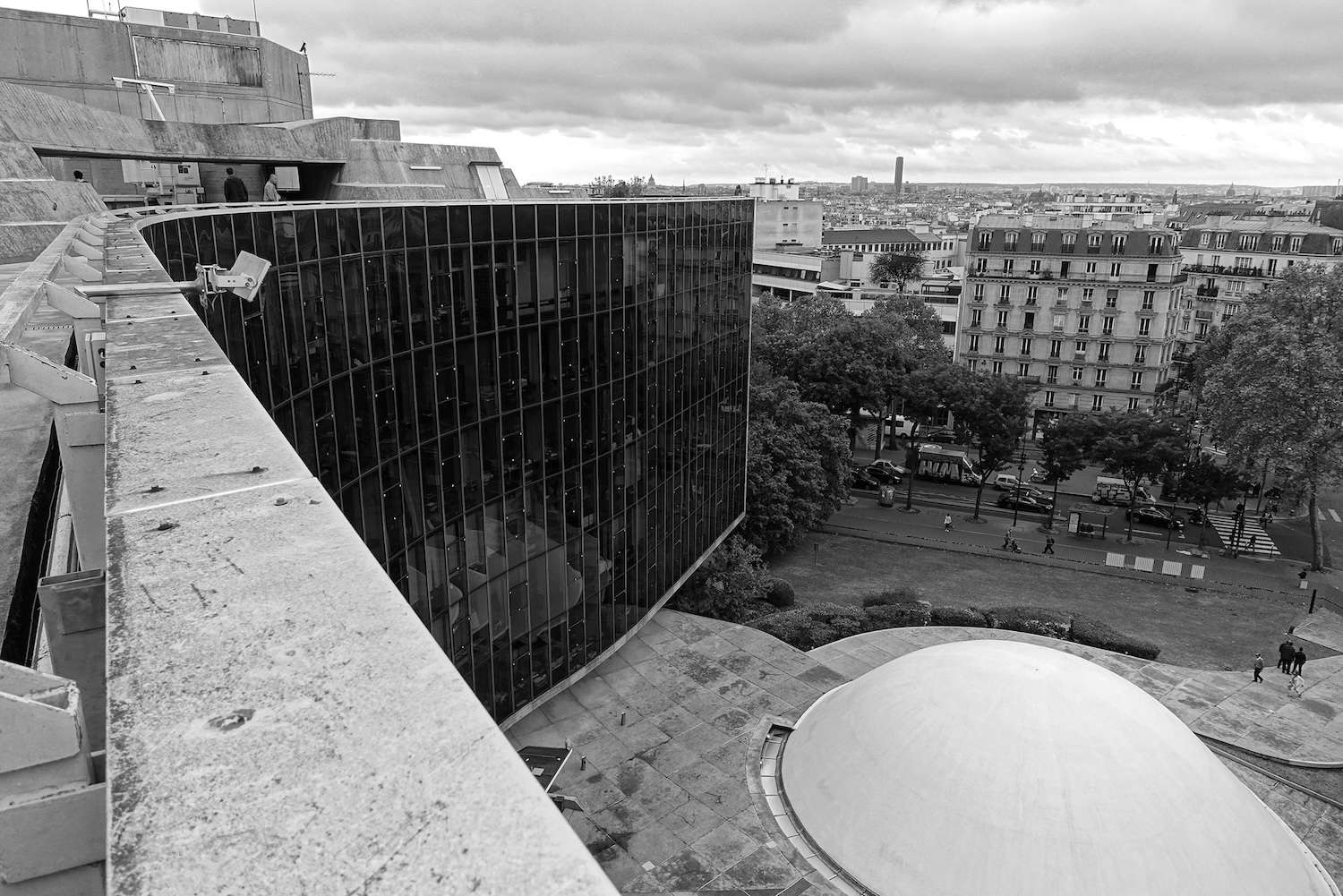
Exterior of the headquarters of the French Communist Party. Photo by Guilhem Vellut via Wikipedia Commons
Shaw explores these “mysteries” and arrives at a deep understanding of the intellectual underpinnings of the headquarters’ commissioning by studying the films and books that were popular among the postwar French Left. By analyzing, for example, 1964’s L’Homme de Rio, a francophone James Bond–type film, Shaw finds a pop-culture reference that exoticized Brazil. He also recounts the rise of structuralist theory in French intellectual life by examining Claude Lévi-Strauss’s Tristes tropiques from 1955, in which the anthropologist studies Indigenous facial tattoo practices of the Amazon and challenges the notion that premodern tribespeople can be considered “primitive” relative to Europeans.
As Shaw recounts, by the PCF’s commissioning in 1965, Stalin’s reign of terror had been exposed and denounced, and the moral flame of Marxism began to flicker. The USSR’s mandated Socialist Realism aesthetic was by then gauche even among the Left’s most ardent devotees, who also could not endorse the International Style—the air-conditioned glass boxes of the American Empire.
In 1968, when construction of the headquarters began, Paris and other cities were racked by student protests, which failed to usher in global socialism but succeeded in replacing orthodox theories about the political economy—such as the base and the superstructure—with the academic ideas of the New Left. One of Shaw’s most incisive points is a lengthy discussion of how the building represents this fraught and evolving relationship between base and superstructure through the arrangement of its program above and below ground—the book is worth a read if for nothing other than this masterful example of formal analysis.
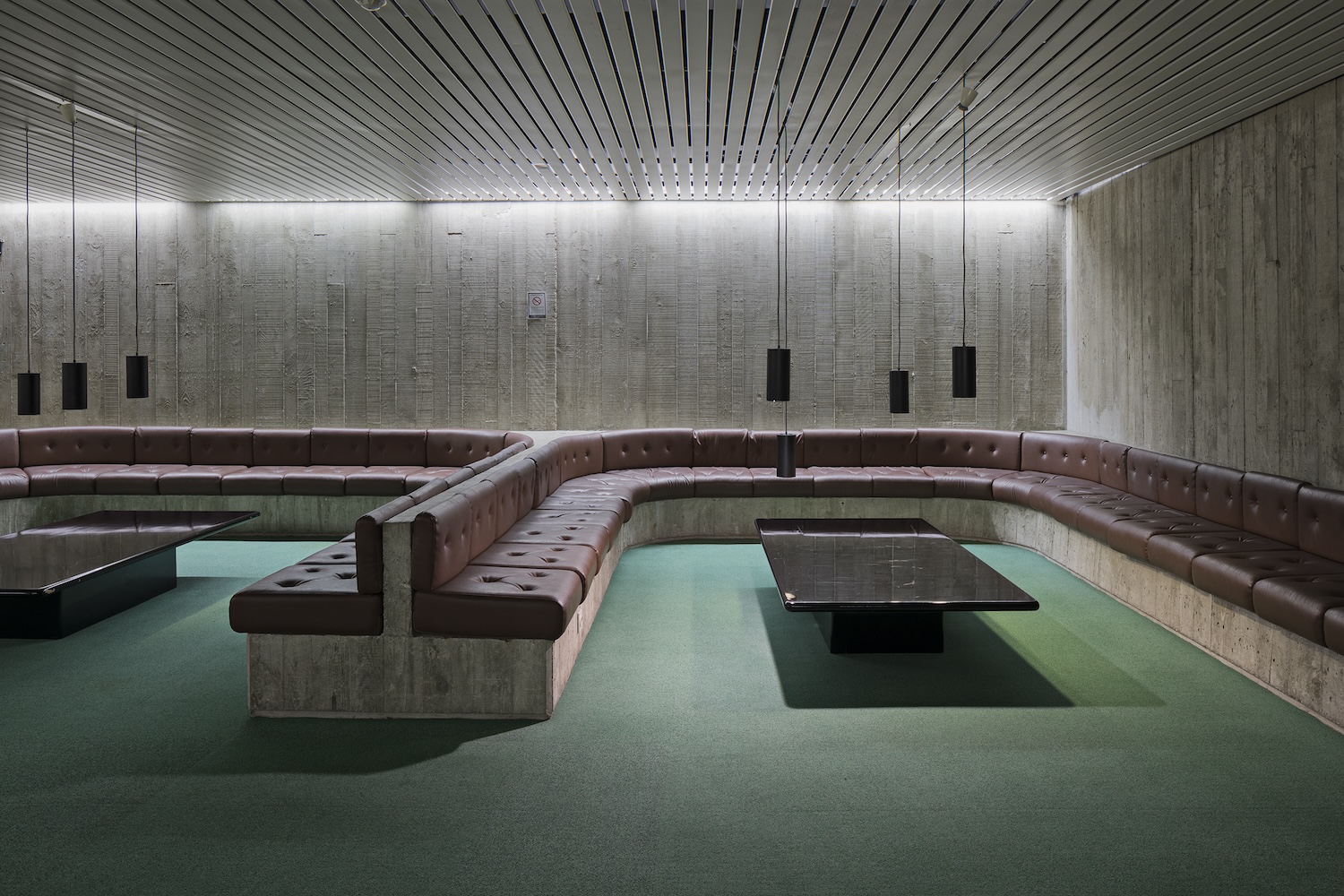
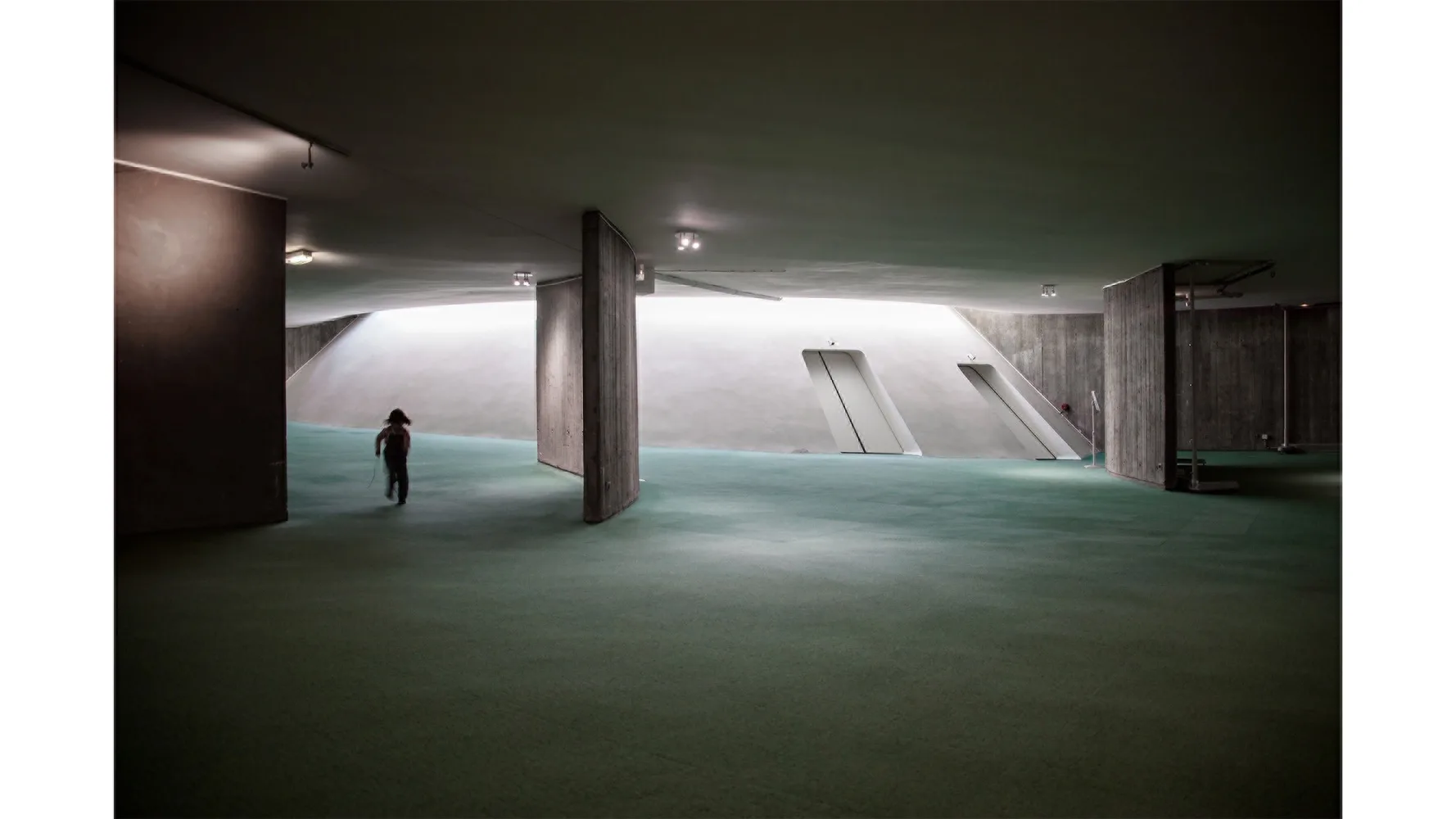
Interior of the headquarters of the PCF. Photo © Laura Fantacuzzi, Maxime Galati-Fourcade
To turn the dialectical thinking back to the cover, perhaps the intrigue it evokes was always the point. French Communists, much like the figure with the hammer and sickle on her buttocks, had turned their backs on the emblems of labor to engage in heady psychodrama. “Parisian intellectuals could deny Corbusian modernism while embracing a nearly identical aesthetic [because it was] now deemed authentic,” Shaw writes. In short, the PCF was drawn to the Brazilian architect’s sex appeal, his sensual curving forms and brises-soleils that put just enough of an erotic twist on essentially Corbusian forms. “France did need Brazil,” Shaw continues, “not simply as a primitive foil for its cosmopolitanism, nor an exotic setting for the discovery of its most cutting-edge intellectual paradigm, but as a discrete washhouse for what it believed was its own slightly soiled architectural modernism.”
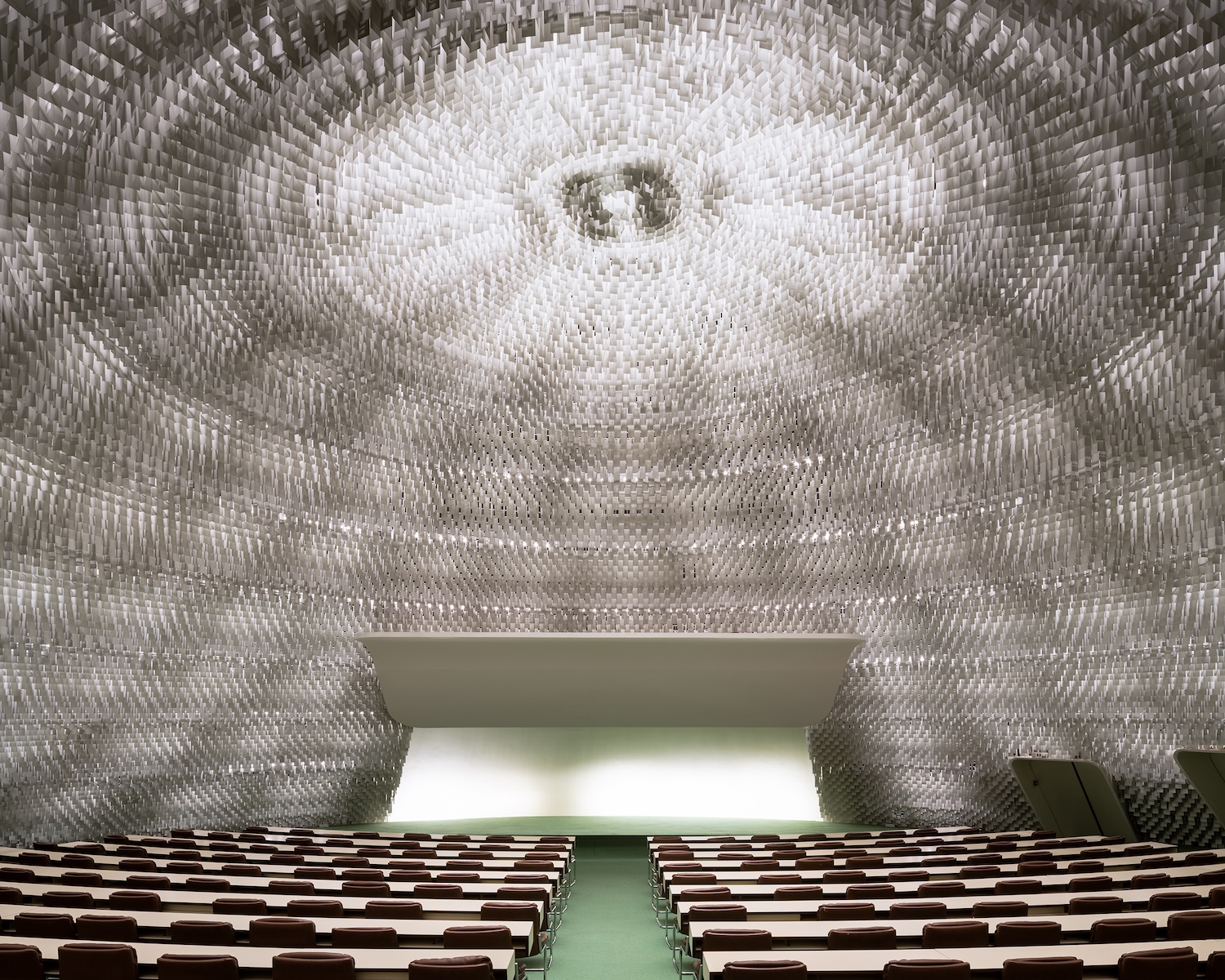
PCF interior view. Photo © Thibaud Poirier
In the penultimate chapter, Shaw, citing Eduardo Viveiros de Castro’s critique of Lévi-Strauss, observes that the anthropological fascination with Brazil also functioned as a mirror for understanding Parisian PCF members’ own inner workings. Likewise, can engaging with this history not also reflect something about our current moment, when the Left seems to be speedrunning the successes and shortcomings from the period Shaw discusses? Today, a new generation—often confusing complaints about consumerism for critiques of capitalism—is increasingly picking up the sullied banner of socialism. No less exoticizing views once again look toward the “Global South” and indigeneity as a palliative for the ills of contemporary life. And sophomorically dismissing canonical figures as Fascist passes for critical thought. Unlike the postwar PCF, however, it’s hard to imagine a renowned architect designing a headquarters for a party like the Democratic Socialists of America or the New Popular Front in France, which lack mass appeal beyond the intelligentsia and the institutional organization that would require. In his conclusion, Shaw argues—somewhat dubiously—that the urgency of fighting climate change might function as a catalyst for a renewed coherence and broader relevance.
By the PCF headquarters’ completion in 1980, interest in Marxism diminished with the global rise of neoliberalism, and the specter of Communism that had haunted Europe was nearly exorcised. Shaw describes how amid this marginalization of the political movement, Niemeyer’s “cave” of the National Council became a “deep cavern” where the PCF retreated to contemplate its Platonic ideals for society. As Marx put it, “First as tragedy, then as farce.”
The Gumshoe series presents its serious architectural studies as pulp detective novels. While this packaging is intentionally misleading, Shaw has acted precisely as a detective, gathering the evidence and digging into the details with an admirable finesse. The result may not be the easy summer read it pretends to be, but it is a thought-provoking and surprisingly timely history.
Looking for quick answers on architecture and design topics?
Try Ask RECORD, our new smart AI search tool.
Ask RECORD →
Looking for a reprint of this article?
From high-res PDFs to custom plaques, order your copy today!