Architectural Record
search
cart
facebook twitter linkedin youtube
  • Sign In
  • Subscribe
  • Sign Out
  • My Account
Architectural Record
  • NEWS
    • Latest News
    • Awards
    • Interviews
    • Obituaries
    • Podcasts
      • Design:Ed Podcast
      • Sponsored Podcasts
  • OPINION
    • Book Reviews / Excerpts
    • Exhibition Reviews
    • Forum
  • EXCLUSIVES
    • Videos
    • Design Vanguard
    • Top 300 Firms
    • Sponsored Content
    • Sponsored eBooks
    • From the Archives
  • CONTINUING ED
    • Editorial Continuing Ed
    • CE Center
    • CE Academies
  • PROJECTS
    • Buildings By Type
    • Reuse & Renovation
    • Museums & Arts Centers
    • Colleges & Universities
    • Multifamily Housing
    • Interiors
    • Lighting
    • Kitchen & Bath
  • HOUSES
    • Record Houses
    • House of the Month
    • Featured Houses
  • PRODUCTS
    • Products by Category
    • Record Products of the Year
    • Latest Products
  • EVENTS
    • Dates & Events
    • Record on the Road
    • Innovation Conference
    • Sustainability in Practice
    • Women In Architecture
    • Webinars
    • Ad Excellence Awards
    • Submit an Event
  • CONNECT
    • Ask RECORD AI
    • Newsletters
    • Contact
    • Advertise
    • Editorial Calendar
    • Store
    • Customer Service
  • SUBMIT
    • Submission Guidelines
    • RECORD Competitions
  • MAGAZINE
    • Subscribe
    • My Account
    • Digital Edition
    • Current Issue
    • Firm Pass
    • Historic Archive
Home » Topics » Architecture News » Commentary & Criticism

Commentary & Criticism
Commentary & Criticism RSS Feed RSS

The New Mathematics of Architecture

Reviewed by
January 16, 2012
No Comments
by Jane Burry and Mark Burry. Thames and Hudson, 2010, 272 pages, $55 Technological advances have transformed mathematics from a loyal handmaiden to architects to a muse, largely because of the advent of accelerated desktop computing and advanced design software. Sophisticated software frees today’s architects from endless calculations, making complex forms like Mobius strips and water bubbles almost as easily achievable as conventional rectilinear forms—a phenomenon that was unimaginable a decade ago. This book—about the increased role of mathematics as a driving force in design—by husband and wife Jane and Mark Burry, is thoughtful, engaging, and richly-illustrated. Most of their
Read More

The Pitfalls of “Scope-creep”

Robert F. Herrmann
January 16, 2012
No Comments
When a small project grows, you may face compensatory and consequential damages. Like poison ivy on a job site in the summer, an architect’s legal obligations to the owner can sometimes grow overnight. This phenomenon is well known as “scope-creep” to us lawyers who solve problems for design professionals. A classic example is the kitchen/bathroom renovation that grows and grows when the owner decides he or she wants to do a gut renovation of the entire house with you running the show. What a boost to the ego, (and one’s bank account). But wait. You probably documented your scope of
Read More

Urban Design Roundup

Ernie Hutton
December 16, 2011
No Comments
Three new books by thoughtful architect-urbanists, usefully read together, explore the current state of urban design. Each author investigates historic and current trends in the evolution of specific American locations, and posits approaches for responding to local character and shaping future growth. Click the image above for details about each book mentioned in this review. Lars Lerup left his native Sweden to come to America in 1966, and has lived in Houston for over 20 years, serving as dean at the Rice School of Architecture from 1993 to 2009.  In One Million Acres and No Zoning, he notes the implications
Read More

Living in the Endless City

Craig Whitaker
December 16, 2011
No Comments
Edited by Ricky Burdett and Devan Sudjic. London: Phaidon Press, 2011, 432 pages, $69. Seldom does a book make me actively angry, but Living in the Endless City did.  When it arrived with the heft and size of a concrete block, I thought it was an architectural sample. Actually, it is  a collection of essays by 38 contributors from conferences on world cities held by the London School of Economics and Deutsche Bank‘s Alfred Herrhausen Society. The book focuses on Mumbai, Sao Paolo and Istanbul. As such, it is a companion piece to an earlier effort published by the same sponsors called The
Read More
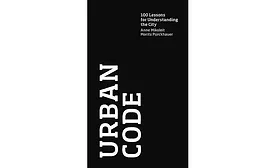
Urban Code: 100 Lessons for Understanding the City

Urban Code: 100 Lessons for Understanding the City

Claire Weisz
December 16, 2011
No Comments

Picking up this little black-and-white volume and spying its table of contents, I couldn’t help but intone her name—Jane Jacobs.


Read More

The Agile City: Building, Well-Being, and Wealth in an Era of Climate Change

By James S. Russell
Jonathan Barnett
December 16, 2011
No Comments
By James S. Russell, Island Press, 312 pages, 2011, $35 James Russell argues in this well-researched and persuasive book that cities will need to become agile: to adapt to the climate changes already in progress and to reduce the potential for a global environmental catastrophe as the world races towards a population of more than 10 billion.  Transitioning to energy-efficient buildings is one form of agility open to all cities. Adopting planning measures that preserve more of the natural environment, supported by diverse forms of transportation and not just highways, is another strategy within the control of state and local
Read More

Japan Roundup

Norman Weinstein
November 15, 2011
No Comments
An island nation where the cool and the ordinary flourish together. Flexibility has long been a guiding principle of Japanese architecture. Consider Japan’s ongoing use of sliding doors or screens to shape fluid interiorspace. These four very different books about Japanese architecture since the 1980s reveal new twists in that heritage of design, many brought about by surprising fusions of vernacular materials and new technology. All of them balance accounts of quintessential Japanese architectural developments—a house with a Shintoshrine at its heart, for example—with an array of ideas applicable globally. Click the image above for details about each book mentioned
Read More

University Planning and Architecture: The Search for Perfection

Jayne Merkel
November 15, 2011
No Comments
By Jonathan Coulson, Paul Roberts, and Isabelle Taylor. Routledge, 2010, 264 pages, $125 This ambitious history chronicles campus design from the founding of the first European universities in the 11th century until last year. Although buildings for higher education are often among the most significant ones we build, surprisingly few good studies of them exist. There are numerous books on individual campuses, some good ones on architects who design college buildings (such as Robert A. M. Stern on Campus), and plenty of guides for facilities managers (even this one has a chapter on how to plan a campus). But only
Read More

Under the California Sun, Architecture Blossomed

Sarah Amelar
November 15, 2011
No Comments
November 2011 Five Los Angeles cultural institutions shed new light on mid-20th-century design efforts. Pacific Standard Time: Art in L.A. 1945–1980—a collaboration among 60 cultural institutions across Southern California—is a grand bazaar, as eclectic, wide-ranging, and uneven as the period of art it celebrates. Initiated by the Getty Foundation, which provided $10 million in grants, this effort engages venues of radically different scales and aspirations to focus on the evolution of the Los Angeles art scene in the decades after World War II. With nearly every institution in on the act—from major museums to university galleries—art takes on a fluid
Read More

The Graduates Gripe

C. J. Hughes
November 15, 2011
No Comments
November 2011 Getting an architecture degree is expensive. Is it worth it in a recession? If bookshelves are to be believed, it has become fashionable to knock the way schools teach architecture. The latest this fall is humorous—The Real Architect’s Handbook: Things I Didn’t Learn in Architecture School, from Guy Horton and Sherin Wing. It dispenses cheeky wisdom such as, “If you already have a B.Arch., consider further education in a different field. Your M.Arch. can’t make a real contribution to the field if you’re just showing off software skills.” Illustration: Dan Page These writers might be on to something.
Read More
Previous 1 2 … 25 26 27 28 29 30 31 32 33 … 39 40 Next
Subscription Center
  • Create an Account
  • Start a Subscription
  • Manage My Account
  • Sign Up for Newsletters
  • Visit Customer Service
  • Update Preferences

More Videos

Sponsored Content

Sponsored Content is a special paid section where industry companies provide high quality, objective, non-commercial content around topics of interest to the Architectural Record audience. All Sponsored Content is supplied by the advertising company and any opinions expressed in this article are those of the author and not necessarily reflect the views of Architectural Record or its parent company, BNP Media. Interested in participating in our Sponsored Content section? Contact your local rep!

close
  • TAMLYN XtremeTrim Exterior Trim
    Sponsored byTamlyn

    Designing Cleaner Panel Facades: Why Exterior Trim Details Matter

  • Building with Vapor Barriers
    Sponsored byReef Industries, Inc.

    Vapor Barriers Help Control Moisture in Tighter Building Designs

  • Duct Interior with Prodeq System
    Sponsored byHenry, a Carlisle Company

    Designing Resilient Water Containment Systems

DESIGN:ED Podcast
Listen to Architectural Record’s DESIGN:ED Podcast

Events

June 16, 2026

Focus on the Façade: Exploring Steel, Timber & Fire-Rated Curtain Walls and Channel Glass Systems

Credits: 1 AIA LU/HSW; 1 AIBD P-CE; 0.1 ICC CEU

Explore modern façade and glazing systems that enhance daylighting, fire safety, and thermal performance while expanding architectural design possibilities.

June 18, 2026

Rebooting the Aging Office Building

Credits: 1 AIA LU/HSW; 1 AIBD P-CE; 0.1 ICC CEU; 1 PDH

Explore façade retrofit strategies and award-winning design concepts that can transform aging office buildings into healthier, higher-performing workplaces for today’s hybrid workforce.

View All Submit An Event

Products

2026 Architect's Square Foot Costbook

2026 Architect's Square Foot Costbook

See More Products

Popular Stories

SanDiegoAirport

Top 300 Architecture Firms of 2026

Coronado Bridge

The Architect’s Guide to San Diego

Dusk House

Design Vanguard 2026: ONO

Hikma Community Complex

Design Vanguard 2026: Mariam Issoufou Architects

West Village Penthouse

Design Vanguard 2026: Brent Buck Architects

Focus on the Facade - Free Webinar - June 16, 2026

The latest news and information

#1 Source for Architectural Design, News and Products

SUBSCRIBE
  • RESOURCES
    • Advertise
    • Contact Us
    • Submit
    • Store
  • ACCOUNT CENTER
    • Create an Account
    • Start a Subscription
    • Manage My Account
    • Sign Up for Newsletters
    • Visit Customer Service
    • Update Preferences
  • PRIVACY
    • PRIVACY POLICY
    • TERMS & CONDITIONS
    • DO NOT SELL MY PERSONAL INFORMATION
    • PRIVACY REQUEST
    • ACCESSIBILITY
  • SERVICES
    • Marketing Services
    • Reprints
    • Market Research
    • List Rental
    • Survey/Respondent Access
  • STAY CONNECTED
    • Linkedin
    • Facebook
    • Instagram
    • YouTube
    • X (Twitter)

Copyright ©2026. All Rights Reserved BNP Media, Inc. and BNP Media II, LLC.

Design, CMS, Hosting & Web Development :: ePublishing